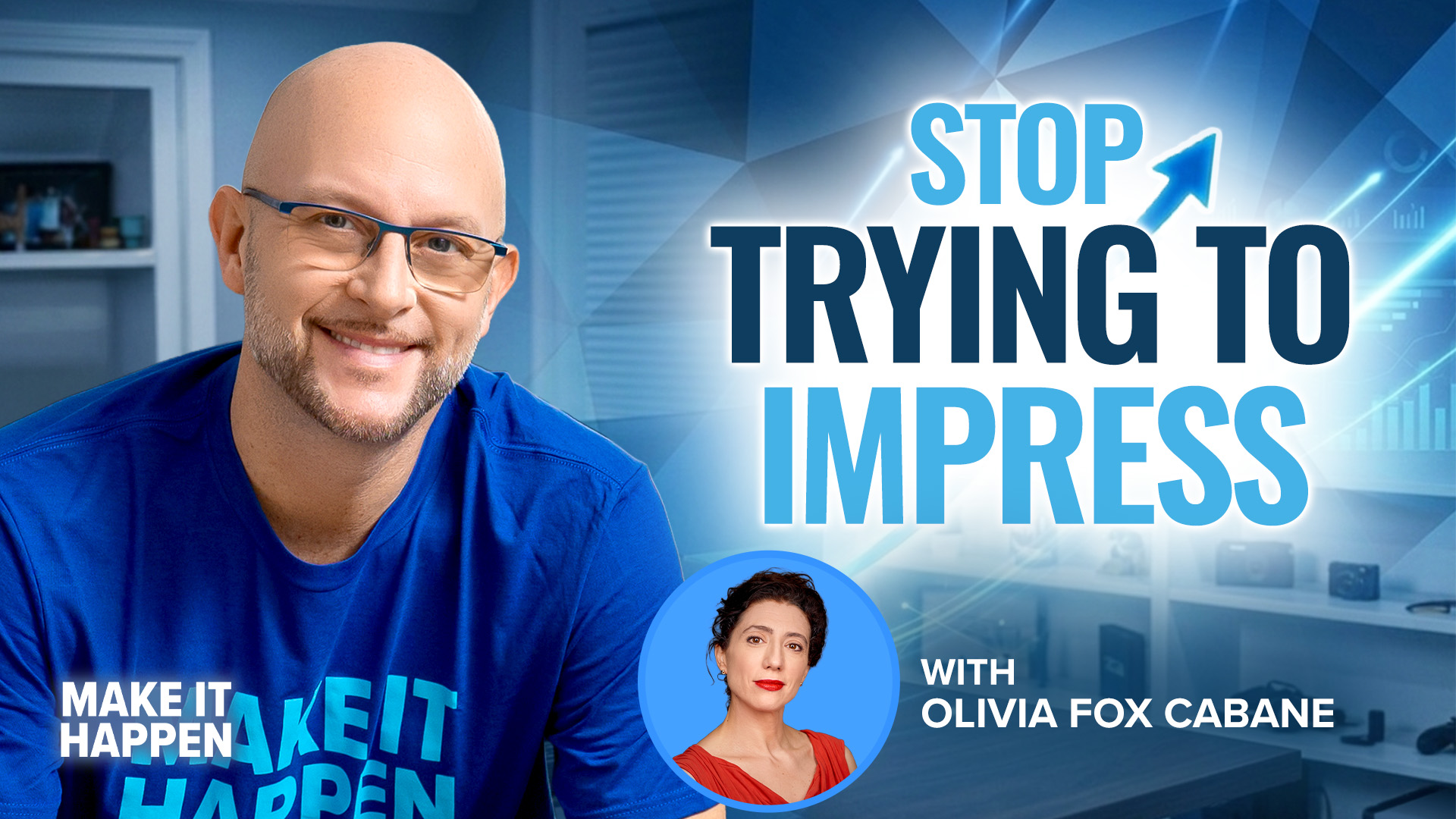
Charisma in sales is a learnable skill, not a personality trait you either have or you do not. Olivia Fox Cabane, bestselling author of The Charisma Myth, has spent decades studying the science of what makes people compelling, trustworthy, and worth listening to. Her core finding: the behaviors that create charisma can be understood, practiced, and improved, and the reps who build them will feel different to buyers before a pitch even starts.
About Olivia
Olivia Fox Cabane is a leading authority on the science of charisma and the bestselling author of The Charisma Myth and The Net and the Butterfly, which have been translated into more than thirty languages. She previously served as Director of Innovative Leadership for Stanford’s StartX accelerator and has taught on charisma, leadership, and innovation at Harvard and MIT. Her work has been featured in The New York Times, Bloomberg Businessweek, and The Wall Street Journal, and she is a cofounder of the KindEarth.Tech Foundation.
Connect with Olivia: LinkedIn | charismamyth.com | Instagram
What you’ll learn
- Why charisma is a behavior that can be learned, not a fixed personality trait
- How presence, power, and warmth shape trust in a sales conversation
- Why preparation can make salespeople more curious, not more scripted
- Why trying to impress buyers often backfires
- How body language starts with mindset, not technique
- Why sales should help people solve problems, not convince them into decisions
Charisma in sales is not a personality trait
The common belief is that charismatic people are born with it. They walk into a room and the energy shifts. They make people feel seen without trying. That feels like something innate, so most people stop there and assume they either have it or they do not.
Olivia’s research tells a different story. Charisma is a cluster of behaviors, not a fixed trait. The three components she identifies are presence, power, and warmth. Presence is giving someone your full attention in a way they can actually feel. Power is the sense that you could have an impact if you chose to. Warmth is the signal that you care about the person in front of you and are genuinely on their side. All three are observable, all three can be practiced, and all three directly affect how buyers experience a conversation.
For sales reps, this changes the question. Instead of “do I have charisma,” the question becomes “am I present, do I project confidence without arrogance, and does this person feel like I am genuinely trying to help them.” That is a much more useful frame, and it is one you can actually do something about.
How presence changes the quality of a conversation
Presence is the component most people underestimate. It is not about eye contact or nodding. It is about whether the person in front of you can feel that you are actually listening versus waiting for your turn to talk.
Buyers pick this up immediately. When a rep is running a script in their head, thinking about their next objection handler, or mentally calculating where this deal stands in their forecast, the person across the table notices. Not necessarily consciously, but they feel the disconnect. The conversation never fully opens up.
Being present requires deliberate effort, especially when reps are running back-to-back calls and chasing activity metrics that push toward volume over quality. Presence is not automatic. It is a decision you make at the start of each conversation, and the quality of what you learn in that conversation is directly tied to whether you made it. This is why human connection in sales remains one of the skills AI cannot replicate: you either show up or you do not, and buyers know the difference.
Why preparation makes you more curious, not less
One objection to preparation is that it makes reps sound scripted. If you know too much going in, you stop listening and start checking boxes. Olivia’s view flips this: deep preparation is what makes genuine curiosity possible.
A rep who walks into a conversation without knowing the basics about the company, the industry, or the buyer’s publicly stated priorities has to spend the first half of the call getting oriented. There is no bandwidth left for real curiosity. A rep who has done the work can skip the surface-level questions and get to the ones that actually matter. That kind of question only exists because the rep knew enough to ask it.
AI can surface background information faster than ever before, which means reps who use it well arrive more prepared and can direct their attention toward what is actually happening in the room. Preparation does not replace curiosity. It creates the conditions for it.
Why trying to impress buyers backfires
Reps are often trained to demonstrate expertise early: lead with case studies, establish credibility, show the buyer you know your stuff. The instinct is to prove you are worth their time before they decide you are not.
Olivia’s research suggests this approach often produces the opposite effect. When you are focused on impressing someone, your attention is on yourself: how you are coming across, whether they are impressed, what they think of you. That self-focus is the opposite of presence, and buyers feel it. The person working hard to seem impressive often comes across as less credible, not more.
The reps who build real trust are not the ones who lead with their resume. They are the ones who ask better questions, listen without an agenda, and make the buyer feel like the most important person in the conversation. That is warmth. It does not require you to be impressive. It requires you to be genuinely interested.
How body language starts with mindset
Body language is often taught as a set of physical techniques: stand this way, make eye contact, use open gestures. Olivia’s point is that most of this instruction is backwards. The body follows the mind. You cannot manufacture confident, open body language while running anxious thoughts. It shows.
The more effective approach is to change the internal state first. What you are thinking before a high-stakes call affects how you carry yourself, how you engage, and how the other person experiences the interaction. A rep focused on what they need from the deal will project differently than one who is genuinely curious about the buyer’s situation. The physical signals follow automatically.
This matters for charisma in sales because the techniques people try to apply on the surface work best when they reflect something real underneath. When they do not, they register as performance. Buyers notice the difference, even if they cannot name it.
Frequently asked questions
What is charisma in sales and can it actually be learned?
Charisma in sales is the ability to make buyers feel seen, confident in you, and genuinely cared for, all at the same time. It is not a fixed personality trait. According to Olivia Fox Cabane’s research, charisma is a cluster of behaviors built on three components: presence, power, and warmth. Because these are behaviors and not innate traits, they can be studied, practiced, and improved. Reps who develop them create a different quality of interaction from the first moments of a conversation.
What are presence, power, and warmth in sales?
Presence is giving your full attention to the person in front of you in a way they can actually feel — not performing attention, but actually being there. Power is the sense that you are capable and confident without being arrogant or threatening. Warmth is the signal that you genuinely care about the other person and are on their side. All three work together. High power with low warmth reads as intimidating. High warmth with low power reads as eager but unimportant. When all three are present, buyers experience the conversation as trustworthy.
Why does trying to impress buyers make you less persuasive?
When your goal is to impress, your attention shifts inward: you are monitoring how you are coming across rather than paying attention to the other person. That self-focus breaks presence, and buyers feel the disconnect even if they cannot name it. The reps who are most persuasive are the ones who make buyers feel genuinely heard and understood. That requires warmth and presence, not a display of expertise. Credibility follows trust. It rarely leads it.
How does preparation improve curiosity in a sales conversation?
Deep preparation removes the need to spend the first part of a conversation gathering basic information, which frees up attention for genuine curiosity about what is actually happening for the buyer right now. A rep who has done the work can ask specific, informed questions that signal real interest rather than scripted discovery. AI tools make pre-call research faster and more thorough, which means the reps who use them well arrive with more bandwidth to be curious rather than less.
How does body language connect to charisma in sales?
Body language is often taught as a set of techniques to apply consciously, but Olivia Fox Cabane’s research suggests the body follows the mind rather than the other way around. The most effective approach is to address the internal state first: what you are thinking and feeling before and during a conversation shapes how you carry yourself automatically. A rep genuinely curious about a buyer’s situation will project differently than one focused on hitting their number. The physical signals of charisma are most reliable when they reflect something real underneath.
John Barrows helps sales leaders decide whether to replace or rebuild their teams for the AI era. For 25+ years he has worked with the world’s most demanding sales organizations, including Salesforce, LinkedIn, Google, Amazon, and Okta, building the frameworks that became Filling the Funnel and Driving to Close. He is the host of Make It Happen Mondays, author of I Want to Be in Sales When I Grow Up, and an LP at GTMfund.
Get John’s weekly insights: subscribe to the JB Sales Learning Lab Newsletter.


